It is 2:40 a.m. Smoke is curling out of an electrical shaft on the 14th floor.
The fire alarm works. Residents start moving down the stairs. Somebody breaks the glass on the hose reel and opens the valve.
A trickle. Then nothing.
Down in the basement, the main fire pump has been switched to "manual" since a repair three weeks ago. Its power supply tripped last night. The fire tank is half empty. Every one of these problems was invisible, until the one night it mattered.
Scenes like this are exactly what Maharashtra's new fire safety rule is designed to prevent. It is called ACMS, the Automated Continuous Monitoring System, and if you own or manage a building in Mumbai or anywhere in Maharashtra, you need to understand it.
Mumbai's real fire safety problem: installed is not the same as working
Mumbai does not lack fire safety equipment. It lacks fire safety equipment that is working when the fire starts.
- Mumbai Fire Brigade data reported in 2022 showed that of 324 fires in high-rise buildings between January 2020 and October 2021, 127 buildings did not have an operational fire-fighting system.
- In 2026, the city again saw serious high-rise fires, and on a single Diwali day, 137 fires linked to firecrackers, after which the BMC banned aerial fireworks.
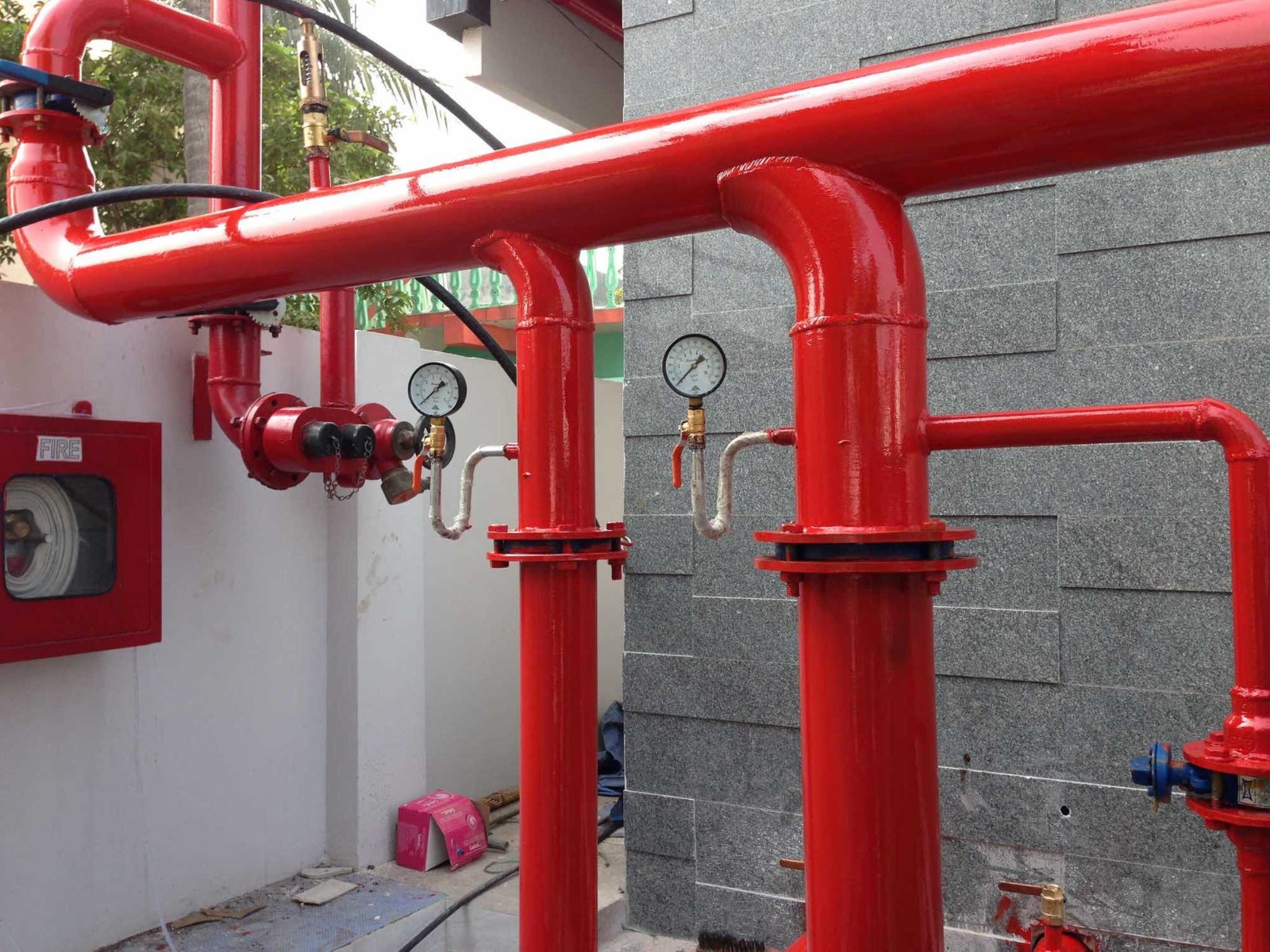
- The usual culprits are simple: pumps not primed, valves left shut, tanks running low and alarm panels left in fault. A sensor would flag each of these weeks before a fire.
A half-yearly inspection catches a fault only on the day of inspection. A fire can start on any of the other 364.
What changed: Maharashtra's ACMS rule
The Maharashtra Fire Prevention and Life Safety Measures Act, 2006 was amended to add a new requirement in section 3(3A): buildings covered by section 45 of the Act must provide their fire-fighting systems with an automated continuous monitoring system.
The details came with the Maharashtra Fire Prevention and Life Safety Measures (Amendment) Rules, 2025, notified by the Urban Development Department on 12 June 2025 (notification No. MFS-2023/C.R.370/UD-14). The rules describe ACMS as a system "based on Internet of Things (IoT)" for the fire-fighting system, covering both active and passive measures, to ensure they stay "in good repair and efficient working condition".
Maharashtra is not alone. In 2026, Delhi also made IoT-based continuous monitoring compulsory for fire systems in specified buildings. Real-time fire system monitoring is fast becoming the national standard.
Phase I and Phase II: what happens when
| Phase | When | Who gets the alerts |
|---|---|---|
| Phase I | With immediate effect from the rules coming into force | The building owner or occupier, and the Licensed Agency that installed the system |
| Phase II | At a later stage, to be notified | Critical alarms also go to the local fire and emergency services, through an API |
In other words, today the alerts come to you. Soon, the most serious ones will also reach the fire brigade automatically.
Who must comply?
The requirement applies to buildings specified under section 45 of the Maharashtra Fire Act. In practice, that typically means the buildings fire departments already scrutinise most closely:
- High-rise residential towers and housing societies
- Commercial towers, offices and IT parks
- Hospitals, hotels, malls and multiplexes
- Factories, warehouses and industrial units
- Data centres and other high-risk occupancies
Not sure if your building is covered? Check with your local fire authority, or ask us for a free ACMS readiness check.
The 20 things ACMS must watch
The rules list exactly which parameters must be monitored, and even how each one should be connected. In plain words:
| System | What is monitored | How |
|---|---|---|
| Fire pumps | Run status of the main hydrant, main sprinkler, standby (diesel/electric), jockey and booster pumps | Water differential pressure switches |
| Pump power | Power to the main hydrant pump and main sprinkler pump | Voltage sensors at the motor control centre (MCC) |
| Line pressure | Hydrant riser low pressure; sprinkler riser low pressure (below 5 bar) | Pressure switch or transmitter |
| Water & fuel | Underground/aboveground fire tank level, overhead tank low level, diesel tank low level | Ultrasonic level devices, level sensor |
| Fire alarm | Detection status, control/repeater panel status, panel battery, manual call points | Potential-free contacts from the fire panel |
| PA system | Working / not working | Fault status from the PA panel |
| Smoke control | Staircase and lift-lobby pressurisation fans; basement supply and exhaust fans | Air differential pressure switches |
How an ACMS works
- Sensors on your pumps, risers, tanks, fans and fire alarm panel detect status and faults.
- An IoT gateway in the building collects every signal.
- The gateway sends data every minute to a secure cloud portal, using the encrypted MQTTS protocol over 4G/5G, Ethernet or Wi-Fi.
- The portal sends real-time SMS, email and app alerts, and keeps data and alarm reports.
- In Phase II, critical alarms also go to the fire brigade.
The rules also build in reliability:
- If the cloud receives no data for more than 15 minutes, it must send an SMS alarm.
- The gateway must run on UPS power with up to 7 hours of backup.
- It must store at least 10,000 event logs, with a real-time clock.
- The platform must offer at least 99% uptime.
Forms A-1 and B-1: the paperwork
Two new certificates come with ACMS, and both are issued by a Licensed Agency:
- Form A-1: certifies that the automated continuous monitoring system has been provided for the building's fire-fighting system.
- Form B-1: issued twice a year, in January and July, certifying that the fire-fighting systems are in good repair and efficient working condition with the help of the ACMS.
The owner or occupier submits them to the Chief Fire Officer or Director: in person, by post or courier, or online. This sits alongside your regular fire safety certificates and Fire NOC obligations.
What does ACMS cost?
There is no one price, because every building is different. The cost depends on:
- How many pumps, risers, tanks and fans need to be monitored
- Whether your fire alarm panel already has outputs for integration
- The condition of your existing system: faults must be fixed first, otherwise the dashboard will simply report them
- The cloud monitoring plan and the AMC you choose
The smartest approach is to treat ACMS as an upgrade to your fire safety system, not a separate gadget: survey, repair, monitor, maintain.
A 10-point checklist for housing societies and building managers
- Find out whether your building falls under section 45 of the Fire Act.
- List every fire pump: main, standby, jockey, booster.
- Check that all pumps are in auto mode and actually start.
- Check hydrant and sprinkler riser pressure.
- Check fire tank and diesel tank levels.
- Check that the fire alarm panel is in normal state, with a healthy battery.
- Check that the pressurisation and exhaust fans run.
- Get a site survey for ACMS sensors and the gateway.
- Plan your Form A-1, then Form B-1 every January and July.
- Nominate who receives the alerts: secretary, facility manager, maintenance agency.
How UltraSafe helps
UltraSafe Equipments has designed, installed and maintained fire hydrant, sprinkler, pump and fire alarm systems since 2010, and our team has hands-on experience installing IoT monitoring devices. Now we bring the same team to IoT fire monitoring (ACMS):
- Readiness survey of your pumps, risers, tanks, fans and alarm panel
- Repairs first, so the system the dashboard monitors actually works
- Supply and installation of the IoT gateway and all sensors
- Integration with your existing hydrant, sprinkler and fire alarm systems
- Commissioning, alert setup and training for your team
- Form A-1 / B-1 documentation through a Licensed Agency
- AMC for the fire systems and the monitoring, plus Fire NOC support
We serve clients across India from our offices in Mumbai (Kandivali E), Indore and Raipur.
Go back to that 2:40 a.m. scene. With ACMS, the tripped pump would have sent an alert the night before. The low tank would have flagged a week earlier. Somebody would have fixed it. That is the whole point: find the fault before the fire does. Book your free ACMS readiness check.
Reference: Maharashtra Fire Prevention and Life Safety Measures (Amendment) Rules, 2025, Urban Development Department notification No. MFS-2023/C.R.370/UD-14 dated 12 June 2025 (Appendix: Automated Continuous Monitoring System).
Frequently Asked Questions
What is ACMS in fire safety?
ACMS stands for Automated Continuous Monitoring System. It is an IoT-based system that monitors a building's fire-fighting systems (pumps, line pressure, water tanks, fire alarm panel, PA and pressurisation fans) and sends real-time alerts if anything fails.
Is ACMS mandatory in Maharashtra?
Yes, for buildings specified under section 45 of the Maharashtra Fire Prevention and Life Safety Measures Act, 2006. The Amendment Rules notified on 12 June 2025 set out the ACMS requirements, with Phase I effective immediately.
What is the difference between ACMS Phase I and Phase II?
In Phase I, alerts go to the building owner or occupier and the licensed agency. In Phase II, to be implemented later, critical alarms will also be sent to the local fire and emergency services through an API.
What parameters does ACMS monitor?
Twenty parameters: pump run status and power for hydrant, sprinkler, standby, jockey and booster pumps; riser low pressure; fire, overhead and diesel tank levels; fire alarm panel, battery, detection and manual call point status; PA status; and pressurisation and basement exhaust fans.
What are Form A-1 and Form B-1?
Form A-1 is a Licensed Agency's certificate that ACMS has been provided. Form B-1 is a Licensed Agency's certificate issued twice a year, in January and July, that the fire-fighting systems are maintained with the help of ACMS.
Can ACMS be installed on an old fire hydrant system?
Yes. ACMS adds sensors and a gateway to existing pumps, risers, tanks and panels. Any faults should be repaired first so the monitoring reflects a working system.
What happens if the internet or power fails?
The rules require the gateway to have up to 7 hours of UPS backup and storage for at least 10,000 event logs, and the cloud must send an SMS alarm if no data arrives for more than 15 minutes.
Who installs ACMS in Mumbai?
UltraSafe Equipments supplies, installs, integrates and maintains ACMS for buildings in Mumbai and across Maharashtra, together with the hydrant, sprinkler and fire alarm systems it monitors.